Japan is entering a new fiscal phase. After years of massive borrowing, something unexpected is happening—its debt-to-GDP ratio is falling. For the first time in 17 years, Japan recorded a fiscal surplus at the end of 2024, signaling temporary relief.
But beneath this surface improvement lies a fragile balance that could easily tip. Interest rates are rising, political pressures are mounting, and structural economic challenges haven’t gone away.
In fact, what looks like progress may just be the quiet before the storm.
Debt Down, But at What Cost?
For a country long known for its towering debt levels, Japan now shows signs of fiscal tightening. Inflation has helped here—tax revenues are up thanks to rising prices, reducing the need for new borrowing. As of early 2025, the debt-to-GDP ratio hovers around 130%, declining gradually each year since 2021.
But inflation, while giving the government more breathing room, has also disrupted Japan’s bond market. In May, a weak auction sent shockwaves through financial circles, pushing 40-year government bond yields to a record 3.7%.
The Ministry of Finance quickly adjusted course, offering more short-term bonds instead. The strategy helped—yields dropped back to about 3%—but the concerns didn’t disappear.
Japan’s Bond Market Is Losing Its Safety Net
Japan’s long-term bond buyers are vanishing. The Bank of Japan, once the main stabilizer in the bond market, is scaling back its holdings. Life insurance companies, which used to buy up long-dated government debt under favorable rules, are now net sellers.
That leaves foreign investors holding the fort—an unreliable group when market sentiment turns sour.
Why It Matters:
1. Interest costs are rising: they already consume 10% of central government spending.
2. The IMF projects this figure could double by 2030.
3. Even with Japan’s efforts to restructure its debt offerings, demand for long-term bonds isn’t returning at the pace the government needs.
Political Pressures Are Making Things Worse
There’s a growing disconnect between economic reality and political decisions. With upper house elections on the horizon in July, public pressure is mounting. Seven opposition parties have proposed cuts to the national consumption tax—currently at 10%. Some suggest small changes, like reducing the food tax from 8% to a lower rate. Others push for total elimination.
Prime Minister Ishiba Shigeru has resisted, arguing Japan’s fiscal situation is worse than Greece’s. Still, he’s not entirely holding the line. On June 13, he proposed a direct cash payout: ¥20,000 for each adult, and double that for children and low-income citizens.
While the government insists these giveaways will be covered by inflation-driven tax revenues, the move echoes previous policies labeled as baramaki—a term for reckless money scattering.
Defense Spending Is Set to Climb
Adding fuel to the fire, Japan is increasing its defense budget. The goal is to grow spending from 1.4% to 2% of GDP by 2028. Some international voices, particularly from U.S. policy circles, are already pushing for more—suggesting defense needs at least 3% of GDP.
Increased military spending means bigger future obligations. Combined with voter-facing handouts, these commitments are setting up a scenario where Japan’s current fiscal progress could reverse quickly.
How Long Can Japan Hold This Line?
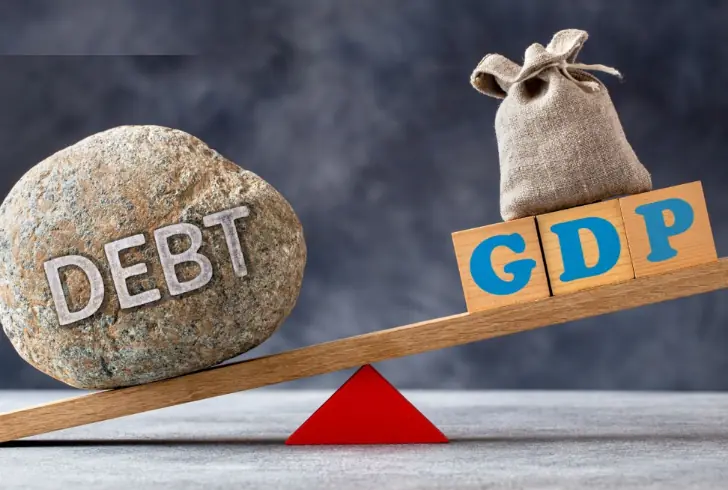
The current setup buys Japan some time. Higher inflation allows the government to run a moderate deficit without increasing its debt burden. A rough estimate suggests Japan could afford a primary deficit (before interest payments) of around 2.5% of GDP without seeing the debt-to-GDP ratio rise—assuming modest growth and low real interest rates.
But that window is shrinking:
1. If real interest rates hit zero, nearly 75% of that budget leeway disappears.
2. Inflation, currently at 3.6%, is already eroding household purchasing power.
3. Real wages are down 4% from 2019 levels.
4. The Bank of Japan is facing mounting losses on its bond portfolio, which will eventually dry up the ¥2 trillion it sends to the government annually.
Japan’s Financial Balancing Act Won’t Last Forever
Despite recent improvements, Japan’s fiscal foundation remains vulnerable. Rising interest costs, shrinking bond buyer support, and political giveaways are stretching its limits. Inflation may offer temporary relief, but when it cools—as the Bank of Japan intends—this fiscal breathing room could vanish. And with higher defense spending and tax cut pressures in play, the margin for error is thin.
Japan’s economic leadership now faces a pivotal test: make difficult choices that ensure long-term fiscal health or give in to short-term political gains. The clock is ticking.